Service areas
Provincetown septic and Title 5 help for the last streets before sewer
The Outer Cape's only long-established sewer, a final expansion due to reach every street by 2030, and no state nitrogen designation.
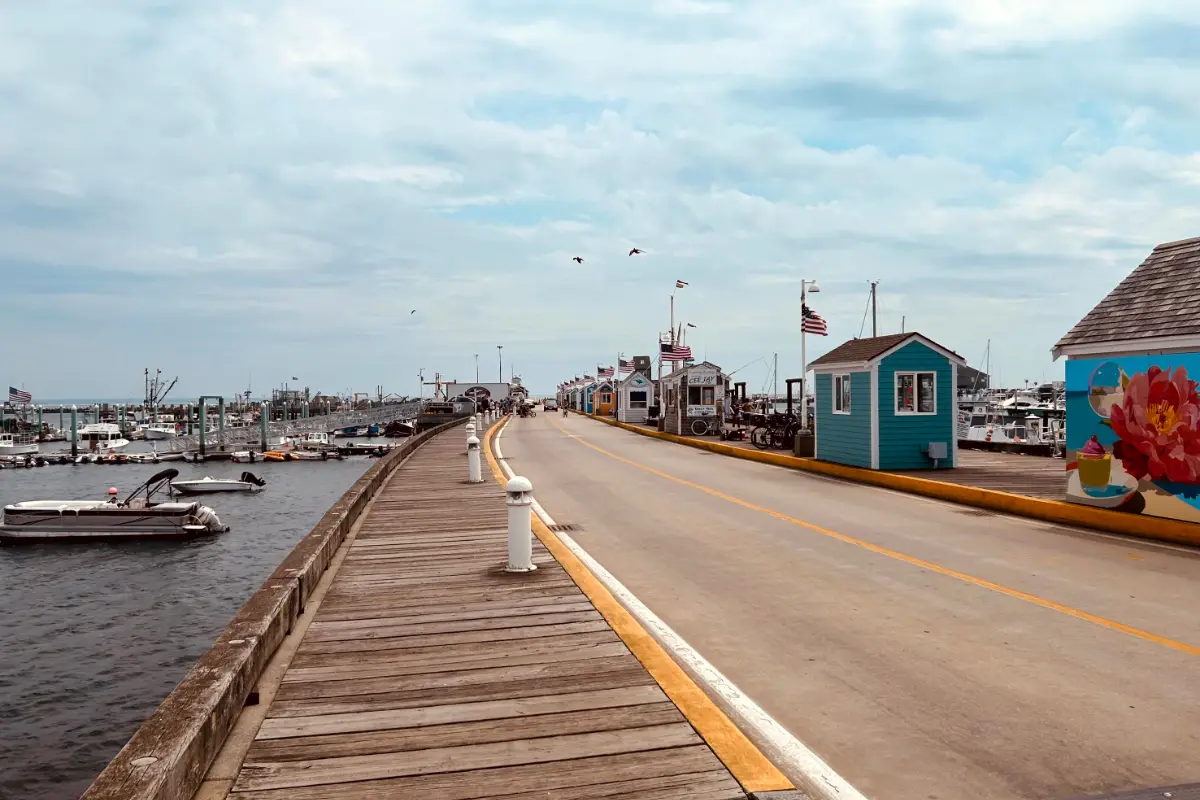
Provincetown runs on a vacuum sewer, with the last streets due by 2030
Provincetown is the one Outer Cape town where sewer, not septic, is the default. A municipal vacuum sewer was built in phases approved between 2000 and 2013, reaching 750,000 gallons per day of treatment capacity by 2013, per the Cape Cod Commission’s harbor baseline. A final expansion is now under way.
The 2025 state Clean Water SRF list carries the Provincetown Satellite Treatment Facility at $25,000,000 as part of the Sewer Modernization and Final Expansion, and the Commission reported on August 31, 2026 that construction was proceeding with sewer service expected to be available town-wide by 2030. The Cape Cod and Islands Water Protection Fund has covered subsidy on $11.73 million of the town’s older sewer debt and lists $4.8 million final and $33.1 million contingent for Provincetown, per the Commission’s fund page. How many properties remain on septic, and the order in which the last phases reach them, was not published in a form we could verify.
The reason the town sewered first is in the same baseline record: before the vacuum system, failing cesspools at commercial properties along Commercial Street were pumped as often as three times a day in summer, on very shallow groundwater and lots too small for Title 5 fields. That history also explains the town’s odd position under the 2023 state nitrogen rules. The designation attached to watersheds with a nitrogen TMDL, and Provincetown Harbor is not on MassDEP’s TMDL list; the town is absent from the watershed permit application table as of June 2026. So the five-year I/A upgrade clock and the NSA sale disclosure do not appear to apply here, subject to a check of any specific parcel on the address map linked from 310 CMR 15.000.
The Health Department at 260 Commercial Street and the supplemental Title 5 form
The Town of Provincetown Health Department, in Town Hall at 260 Commercial Street, (508) 487-7020, permits septic work for the properties still off the sewer and receives Title 5 inspection reports. Provincetown adds one local step: every Title 5 inspector must complete the Board of Health’s supplemental form covering local regulations.
We could not open that form, the Board’s local septic rules, or the Water and Sewer Board’s Sewer Rules and Regulations, which govern connections to the vacuum and gravity mains. The mandatory-connection deadline after sewer reaches a street, the connection fee and the betterment terms are therefore unverified; the Health Department’s wastewater page and the DPW Sewer Department are where to ask. Fees and office hours were also not published in a form we could check.
For the remaining septic lots the state code applies in full. A sale requires an inspection by a MassDEP-approved System Inspector within two years before transfer, filed within 30 days. A failure starts a two-year upgrade clock under 310 CMR 15.305, which the Board can extend on an enforceable schedule when a funded sewer connection is within five years, and once sewer is available the system must be abandoned under 310 CMR 15.354: pump the tank, then remove it or break the bottom and fill it. The Title 5 guide covers each step.
Betterment or replacement: the Provincetown money question
The DPW publishes two fact sheets, T5 Replacement Cost and Betterment Cost, because that comparison is the decision most Provincetown owners face. We could not open the betterment sheet, so the amounts are unverified; ask the town for current figures before choosing.
The financing side is clearer. The Cape Cod AquiFund lends at 0% or 2% to income-qualified owner-occupants for a new sewer connection once they hold the Notice to Connect letter, at 4% for septic or I/A work on a primary residence, and at 5% for seasonal, rental or soon-to-list homes, all up to 20 years on the tax bill. The state septic credit returns 60% of up to $30,000 for a failed system at a principal residence, $18,000 lifetime and $4,000 a year, and under Directive 01-6 it covers a sewer connection required to remedy a failed system or ordered by Title 5, a court or a consent order. Voluntary connections do not qualify, and neither does a second home, which matters in a town where seasonal ownership is common. Program terms are set by the agencies and change; confirm with the state or county page linked here. The AquiFund guide walks through the paperwork.
The septic and sewer jobs left in Provincetown
The defining job here is a sewer connection: the lateral or vacuum valve pit tie-in, plumbing changes, and abandonment of the old tank. Title 5 inspections still precede the sale of any property not yet connected, with the town’s supplemental form attached.
Between now and a street’s phase, septic pumping on a schedule and small septic repairs are what carry an old system through. A full septic system replacement is rare and worth questioning when the town’s own fact sheet compares it with a betterment. And cesspool replacement, once the town’s chronic problem, now comes up only on the last unsewered lots. The sewer-versus-septic guide frames the choice.
A sandy hook with very shallow groundwater
Provincetown sits on the sand hook at the tip of the Cape and draws its water from wells in Truro, sharing the Outer Cape’s sole-source aquifer. Groundwater lies very close to the surface along Commercial Street, and the lots are small and dense, which is why cesspools and conventional Title 5 fields never worked and vacuum collection did.
The harbor watershed is shared with Truro through East Harbor. The town’s year-round population grew about 25% between 2010 and 2020, to 3,664, per the Cape Cod Commission, on the same few square miles.
Next door, Truro has no sewer at all and is planning to stay that way, and Wellfleet adopted harbor-driven septic rules in 2025. All towns we cover are on the service areas page.
Permits
Septic permits in Provincetown
- Office
- Town of Provincetown Health Department (Board of Health)
- Address
- 260 Commercial Street, Provincetown, MA 02657
- Phone
- (508) 487-7020
Confirm hours and fees with the office before you visit; towns change them without notice.
Money
Help paying for septic work
Two public programs pay for a large share of most Title 5 upgrades. Which one applies depends on the county the house is in.
Statewide, principal residence
State income tax credit for Title 5 work
- 60% of qualifying repair or replacement costs, on up to $30,000 of expenses
- Up to $18,000 in total credit per household, taken at up to $4,000 a year
- Unused credit carries forward for up to 5 years
- Applies to the home you live in, not a rental or second home
Barnstable County homeowners only
Low-interest county financing (AquiFund)
- County-run Community Septic Management Loan Program
- Interest tiers from 0% to 5%, set by the type of work and whether you live there year-round
- Repaid over up to 20 years as a betterment on your property tax bill
- Covers Title 5 repairs, replacements and nitrogen-reducing upgrades
Plymouth County homeowners
Financing for South Shore homes
- AquiFund does not extend past the Cape Cod Canal
- The Town of Plymouth runs its own Title V septic loan, repaid as a betterment on the tax bill
- MassHousing offers a septic repair loan for eligible owner-occupants statewide
- Ask your board of health which town programs are open this year
Program terms are set by the agencies and change; confirm with the state or county page linked here before you count on a number.
Licensing
Check the credentials before you sign
Massachusetts has no single statewide septic contractor license. Two separate approvals matter. A Title 5 inspection is valid only when a System Inspector approved by MassDEP performs it. Installation and repair work is permitted town by town: each board of health licenses installers and issues the Disposal System Construction Permit for the job.
You can check both yourself. The state publishes the inspector training and approval program, and the regulation itself sets out who may do what.
Three questions to ask
-
Which of you holds the Title 5 System Inspector approval, and can I see the certificate?
Only a MassDEP-approved System Inspector may sign an official inspection form. The approval is personal to the inspector, not to the company.
-
Are you on this town’s current list of approved septic installers?
Installation licenses are issued by each board of health, one town at a time. A crew licensed in Falmouth is not automatically licensed in Bourne.
-
Who pulls the permit, and will I get the as-built plan and the Certificate of Compliance?
The permit and the final sign-off are what a future buyer’s inspector will ask for. Get it in writing that both come to you when the work closes out.
The process
From your request to a site visit
-
Your request goes to one local septic company
It goes to a single septic company that works in your town and handles your kind of job. It is not sold to a list, and you will not get calls from five companies.
-
They call to set up a site visit
Expect a call, usually within one business day. The contractor asks about the house, the inspection report if you have one, and your timing, then books a visit.
-
You get a written quote and decide
After the visit you receive a written estimate with the scope and the permit plan. There is no fee and no obligation. If it is not a fit, say so and that is the end of it.
Questions homeowners ask
Is Provincetown in a nitrogen sensitive area?
It does not appear to be. The 2023 designation attached to Cape watersheds with a nitrogen TMDL, and Provincetown Harbor is not on MassDEP's TMDL list; Provincetown is also absent from the state's watershed permit application table as of June 2026. That means neither the five-year I/A upgrade clock nor the NSA disclosure at sale applies, unless a specific parcel shows up on the MassDEP NSA address-lookup map. Check the address before you assume.
Does Provincetown have sewer?
Yes, and it is the Outer Cape's only long-established one. The vacuum sewer was built in phases approved between 2000 and 2013, reaching 750,000 gallons per day of treatment capacity by 2013. A Sewer Modernization and Final Expansion with a $25 million satellite treatment facility is under construction, and the Cape Cod Commission reported in August 2026 that sewer service is expected to be available town-wide by 2030. Some properties remain on septic until their phase arrives.
Where do I get a septic permit in Provincetown?
The Town of Provincetown Health Department at Town Hall, 260 Commercial Street, (508) 487-7020, handles septic permits for the shrinking number of unsewered properties and receives Title 5 reports, which must include the Board of Health's supplemental form on local regulations. Sewer connections go through the DPW Sewer Department under the Water and Sewer Board's Sewer Rules and Regulations. Fees, hours and the local septic rules were not published in a form we could verify.
Can I use AquiFund in Provincetown?
Yes. Provincetown is in Barnstable County, and here the most useful AquiFund tier is the 0% or 2% loan for an owner-occupied, income-qualified primary residence making a new sewer connection, available once you hold the town's Notice to Connect letter. Septic and I/A work on a primary residence is 4%, and seasonal, rental or soon-to-list homes pay 5%. Terms run up to 20 years as a betterment on the tax bill. Call (774) 330-3010.
Should I replace a failing Title 5 system if sewer is coming to my street?
Ask the Health Department and the DPW first. The town publishes DPW fact sheets titled T5 Replacement Cost and Betterment Cost precisely because that comparison is the Provincetown question; we could not open them, so get the current figures from the town. A failed system still carries a two-year upgrade deadline under state Title 5, but a Board of Health can approve an enforceable schedule with interim pumping when a funded connection is within five years.
Why did Provincetown sewer before the rest of the Outer Cape?
Cesspools. Cape Cod Commission baseline material records that before sewering, failing cesspools at commercial properties along Commercial Street were pumped as often as three times a day in summer. Very shallow groundwater and dense small lots made conventional Title 5 systems unworkable, so the town chose a vacuum collection system, which needs less depth than gravity sewer. That history is why so few cesspools remain here compared with Eastham or Truro.
Tell us about your system
One call or form, a written quote after a site visit. Free for homeowners, no obligation.