Service areas
Septic system help in Brewster, MA: Title 5, permits and nitrogen rules
No municipal sewer, a Pleasant Bay watershed permit to satisfy, and a Board of Health with its own nitrogen and transfer rules.
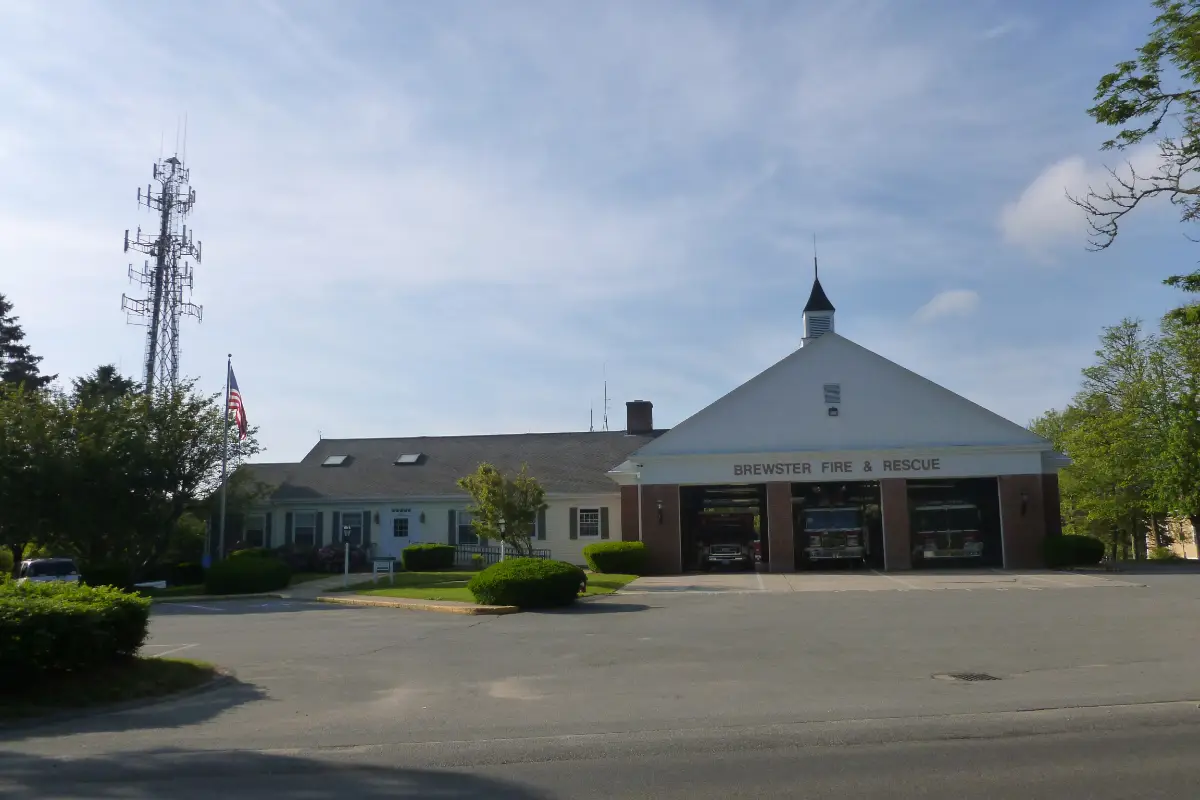
No sewer in Brewster, so the septic system is the whole plan
Brewster has no municipal sewer. All of its roughly 10,300 year-round residents, and the summer population on top of them, discharge to on-site systems, and the town’s 2022 Integrated Water Resource Management Plan update intends to keep it that way. There are no Brewster projects on the state’s 2025 or 2026 Clean Water SRF lists and no Water Protection Fund sewer awards.
That choice sits inside a legal obligation. Brewster is one of four towns, with Chatham, Harwich and Orleans, holding the 2018 Pleasant Bay Watershed Permit, the first issued in Massachusetts, described by the Cape Cod Commission. Brewster’s share is 981 kilograms of nitrogen removed per year. By 2022 the town had met about 56% of that through golf-course fertilizer management and its Chapter 119 fertilizer bylaw. The remainder is being pursued through more golf-course changes, a possible neighborhood treatment plant costing $10 to $15 million over 20 years, nitrogen trading with the other permit towns, or I/A upgrades on roughly 320 septic systems. The Pleasant Bay Alliance references a revised permit issued in 2026; its contents should be confirmed with the town.
The 2023 state nitrogen rules changed less here than elsewhere. Brewster’s designated watersheds are Pleasant Bay, Herring River, Bass River and Swan Pond River, and on July 7, 2023 the town filed for all of them: a full Herring River watershed permit application (26-WP95-0001-APP) and de minimis load applications for its small Bass River and Swan Pond shares, per the MassDEP application table. With filings on record for every watershed, the automatic five-year I/A upgrade requirement in 310 CMR 15.215 is suspended for Brewster homeowners. The Commission reported on August 31, 2026 that Brewster had submitted the Herring River application and released its first ponds management plan, since about 600 properties sit within 300 feet of a freshwater pond where phosphorus, not nitrogen, is the concern.
Filing with the Brewster Health Department on ViewPoint Cloud
Permits come from the Town of Brewster Board of Health and Health Department at 2198 Main Street, (508) 896-3701 ext. 1120, brhealth@brewster-ma.gov, open Monday through Thursday 8:30 a.m. to 4:00 p.m. and Friday by appointment. Your engineer files the Disposal System Construction Permit application through the ViewPoint Cloud portal. Fees could not be verified; ask the department.
Brewster layers several local rules on Title 5, listed on its health regulations page. The Nitrogen Loading Regulation applies inside the Water Quality Protection District, an overlay under Zoning Bylaw Article XI covering Zone I and Zone II of public wells and the Pleasant Bay watershed, and every septic plan there needs the town’s nitrogen loading calculation sheet. A Leaching Facility Setback Regulation, a Supplement to I/A Monitoring Regulation, Zone 2 Deed Restrictions, a Bedroom Definition Regulation and a Variance Request Regulation also apply. An In-House Septic Local Upgrade Approval Policy lets staff approve certain Title 5 upgrades administratively rather than at a Board hearing.
Two rules matter most at sale. Brewster’s Real Estate Transfer regulation has required a local inspection before transfer since January 1, 1988, adopted May 19, 1987 and amended through 1995; its current text could not be read, so confirm the details with the department. The town’s FAQ adds that a transfer inspection is valid for two years, that a new Certificate of Compliance is accepted instead of an inspection for two years, and that you should not pump within two weeks before an inspection. The Title 5 guide covers the state side.
Loans, the credit and Brewster’s planning grants
For a replacement, Brewster owners have the Cape Cod AquiFund at 4% for septic and I/A work on a primary residence, 5% for seasonal, rental or soon-to-list homes, up to 20 years as a tax-bill betterment. The state septic credit returns 60% of up to $30,000 for a failed system at a principal residence, $18,000 lifetime.
The credit is limited to $4,000 a year with a five-year carryforward and does not apply to a second home. The MassHousing Septic Repair Loan offers owner-occupants up to $25,000 through participating lenders, with income limits. At the town level, MassDEP awarded Brewster $77,053 on March 25, 2024 and $58,680 on January 20, 2026 for watershed planning. Brewster is also one of four pilot towns, with Bourne, Falmouth and Wellfleet, for a county Responsible Management Entity that would maintain I/A systems like a small utility. Program terms are set by the agencies and change; confirm with the state or county page linked here.
What Brewster homeowners hire out most
With no sewer option, a failed field means a full septic system replacement, and in the Pleasant Bay watershed the design often becomes an innovative/alternative system to satisfy the Nitrogen Loading Regulation. Title 5 inspections precede every sale, and Brewster’s transfer rule adds a local layer to the state report.
Cesspool replacement is the third common job, since the transfer regulation reportedly treats a lone cesspool as an upgrade item; read the cesspool guide before you list. Septic design and soil evaluation comes first on any lot near a pond or inside a well zone, and a leach field replacement in the reserve area is the cheaper fix when the tank still passes.
Ponds, wells and the Water Quality Protection District
Brewster’s groundwater and ponds are recharged entirely by rain falling on glacial sand. Phosphorus binds to iron and manganese underground and travels only short distances, which is why the town focuses on systems within about 300 feet of a pond, per the 2022 plan. Nitrogen behaves differently and reaches Pleasant Bay.
Brewster holds about 25% of that watershed’s area but only 13 to 14% of its nitrogen load; the 208 Plan summary counts 5,796 parcels across the four towns with septic carrying 255 of 272 million gallons of wastewater a year. The nitrogen rules guide explains the permit mechanics.
Downstream, Orleans and Dennis are building sewers to meet the same targets Brewster is meeting on-site. All towns we cover are on the service areas page.
Permits
Septic permits in Brewster
- Office
- Town of Brewster Board of Health and Health Department
- Address
- 2198 Main Street, Brewster, MA 02631 (Town Office Building)
- Hours
- Monday-Thursday 8:30 a.m. to 4:00 p.m.; Friday by appointment
Confirm hours and fees with the office before you visit; towns change them without notice.
Money
Help paying for septic work
Two public programs pay for a large share of most Title 5 upgrades. Which one applies depends on the county the house is in.
Statewide, principal residence
State income tax credit for Title 5 work
- 60% of qualifying repair or replacement costs, on up to $30,000 of expenses
- Up to $18,000 in total credit per household, taken at up to $4,000 a year
- Unused credit carries forward for up to 5 years
- Applies to the home you live in, not a rental or second home
Barnstable County homeowners only
Low-interest county financing (AquiFund)
- County-run Community Septic Management Loan Program
- Interest tiers from 0% to 5%, set by the type of work and whether you live there year-round
- Repaid over up to 20 years as a betterment on your property tax bill
- Covers Title 5 repairs, replacements and nitrogen-reducing upgrades
Plymouth County homeowners
Financing for South Shore homes
- AquiFund does not extend past the Cape Cod Canal
- The Town of Plymouth runs its own Title V septic loan, repaid as a betterment on the tax bill
- MassHousing offers a septic repair loan for eligible owner-occupants statewide
- Ask your board of health which town programs are open this year
Program terms are set by the agencies and change; confirm with the state or county page linked here before you count on a number.
Licensing
Check the credentials before you sign
Massachusetts has no single statewide septic contractor license. Two separate approvals matter. A Title 5 inspection is valid only when a System Inspector approved by MassDEP performs it. Installation and repair work is permitted town by town: each board of health licenses installers and issues the Disposal System Construction Permit for the job.
You can check both yourself. The state publishes the inspector training and approval program, and the regulation itself sets out who may do what.
Three questions to ask
-
Which of you holds the Title 5 System Inspector approval, and can I see the certificate?
Only a MassDEP-approved System Inspector may sign an official inspection form. The approval is personal to the inspector, not to the company.
-
Are you on this town’s current list of approved septic installers?
Installation licenses are issued by each board of health, one town at a time. A crew licensed in Falmouth is not automatically licensed in Bourne.
-
Who pulls the permit, and will I get the as-built plan and the Certificate of Compliance?
The permit and the final sign-off are what a future buyer’s inspector will ask for. Get it in writing that both come to you when the work closes out.
The process
From your request to a site visit
-
Your request goes to one local septic company
It goes to a single septic company that works in your town and handles your kind of job. It is not sold to a list, and you will not get calls from five companies.
-
They call to set up a site visit
Expect a call, usually within one business day. The contractor asks about the house, the inspection report if you have one, and your timing, then books a visit.
-
You get a written quote and decide
After the visit you receive a written estimate with the scope and the permit plan. There is no fee and no obligation. If it is not a fit, say so and that is the end of it.
Questions homeowners ask
Is Brewster in a nitrogen sensitive area?
Parts of it. Brewster's designated watersheds are Pleasant Bay, which is already under a watershed permit, plus Herring River and small shares of Bass River and Swan Pond River. On July 7, 2023 the town filed a Herring River watershed permit application and de minimis load applications for the other two, so the state's five-year I/A upgrade clock is not running for Brewster homeowners. Sellers in a designated watershed still make the NSA disclosure at closing.
Does Brewster have sewer?
No. Brewster's 2022 Integrated Water Resource Management Plan update states the town has no municipal sewer, and the town has no sewer projects on the state's 2025 or 2026 Clean Water SRF lists. The plan favored a neighborhood-scale treatment plant costing $10 to $15 million over 20 years, nitrogen trading with the other Pleasant Bay towns, or I/A upgrades on roughly 320 systems rather than town-wide pipes. Every replacement here is an on-site system.
Where do I get a septic permit in Brewster?
From the Brewster Health Department at 2198 Main Street, (508) 896-3701 ext. 1120, brhealth@brewster-ma.gov, open Monday through Thursday 8:30 a.m. to 4:00 p.m. and Friday by appointment. Your engineer files the Disposal System Construction Permit application through the town's ViewPoint Cloud e-permitting portal, and inside the Water Quality Protection District the plan must carry a Nitrogen Loading Regulation calculation sheet. Fees are not published in a form we could verify, so ask the department.
Can I use AquiFund in Brewster?
Yes. Brewster is in Barnstable County, so the Cape Cod AquiFund applies: 4% for septic repair, replacement, cesspool upgrades and I/A systems on a primary residence, 5% for seasonal homes, rentals and homes expected to list within 12 months, up to 20 years, repaid as a betterment on the tax bill and recorded at the Registry of Deeds. The 0% and 2% tiers are for new sewer connections, which do not exist in Brewster. Call (774) 330-3010.
Does a cesspool have to be replaced when I sell in Brewster?
Brewster's property-transfer inspection regulation, in force since January 1, 1988, is stricter than state Title 5 and, per a secondary summary, treats a single cesspool as requiring upgrade and defines marginal and failed categories the state does not use. We could not read the current text on the town site, so confirm the cesspool rule with the Health Department before listing. Under state rules alone a cesspool fails only on hydraulic or setback criteria.
How far from my foundation can the new system go?
Brewster's Health Department FAQ puts the septic tank at least 10 feet from a full foundation wall and the leaching area 20 feet, with either allowed at 10 feet from a slab or frost wall; pools follow the same setbacks. The department recommends pumping every three to four years and asks that you not pump within two weeks before a Title 5 inspection, because an empty tank hides the liquid level the inspector needs to see.
Tell us about your system
One call or form, a written quote after a site visit. Free for homeowners, no obligation.