Guide
What it costs to replace a septic system on Cape Cod
Price bands by system type, the site conditions that add five figures, and what the credit and a county loan leave you paying.
Written by the Cape Cod Septic Experts editorial team · How we check our facts
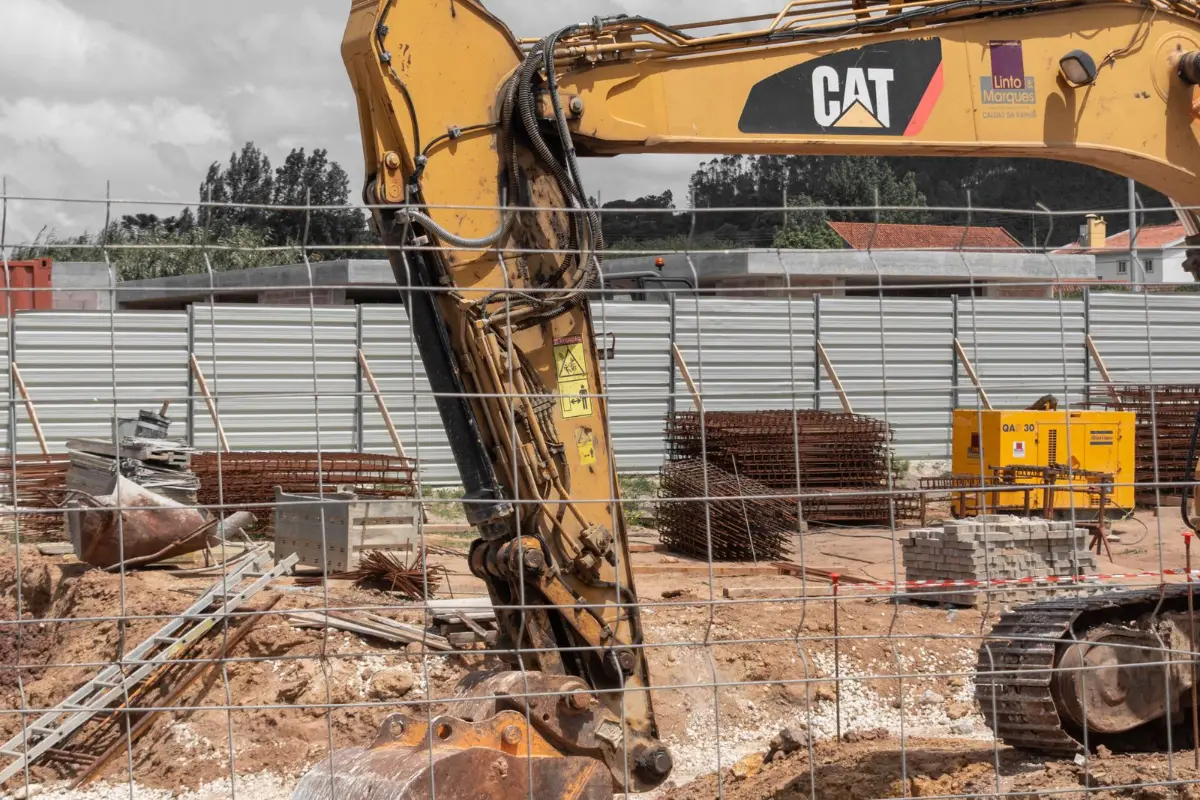
A conventional Title 5 replacement for a 3-bedroom Cape house typically runs $20,000 to $30,000, and $25,000 to $40,000 for a 4-bedroom. A nitrogen-reducing I/A system is quoted between $17,000 and $40,000 depending on whose figures you read. A cesspool conversion tracks a full replacement at $20,000 to $35,000, and a raised bed on a high-groundwater lot pushed one Cape example to about $42,000. None of those numbers comes from a Cape contractor’s price list, because none publishes one.
What each of the four common projects runs
Four projects cover most Cape replacements. A conventional 3-bedroom system with a 1,000-gallon tank is quoted at $20,000 to $30,000 and a 4-bedroom with a 1,500-gallon tank at $25,000 to $40,000 (CheckMySeptic and Pavel Buys Houses, both secondary). A 5-bedroom Massachusetts job with a pump came in at $36,000.
I/A systems are the best-documented number here, and the spread is wide. MassDEP’s own June 2023 FAQ gave $17,000 to $36,000 depending on the condition of the existing system and the site. The Falmouth Enterprise reported about $25,000 of hardware plus roughly $10,000 to install in March 2025. Eastham’s board of health worked from about $40,000 as typical in September 2026, with a range of $15,000 to $100,000 and one neighbour who paid $70,000 (Provincetown Independent). A 2020 NEWEA primer framed it as a $5,000 to $15,000 premium over a conventional system, which is the most useful way to think about it.
Mound or raised systems are not a separate product so much as a conventional system built in imported sand, and the Cape example in the research reached about $42,000. Cesspool conversions are a full new system plus pumping, crushing and filling the pit under 310 CMR 15.354, so they land at $20,000 to $35,000. Replacing only the leaching area runs $10,000 to $20,000 here once the new field, distribution box, engineering and permit are counted, which is the case the leach field replacement page covers.
Why two lots on the same street quote differently
Site conditions, not square footage, decide the number. The biggest single lever is depth to groundwater: 310 CMR 15.212 requires 4 feet of separation below the leaching stone, or 5 feet where the soil percolates at 2 minutes per inch or faster, which describes most Cape sand. Miss that and the field goes up in fill with a pump chamber to lift effluent to it.
Bedroom count sets the size of everything: design flow is 110 gallons per day per bedroom under 15.203, so a 4-bedroom system needs a larger tank and 440 gallons per day of leaching area. Small lots near wetlands, wells or property lines need a Local Upgrade Approval under 15.405, which lets a board of health relax separation, setbacks and field size to the least degree necessary for a failed system, and sometimes accepts an I/A unit as the trade for a smaller field. Access and restoration move the rest: tight driveways, mature trees, stone walls and irrigation all cost excavator time, and landscaping restoration is not eligible for the state credit. On the South Shore, clay, till and ledge do what groundwater does on the Cape, enlarging the field or requiring blasting and imported fill. The design and soil evaluation page explains what the test pits decide.
What the credit and a county loan do to the real number
Two programs change the net. The Massachusetts credit returns 60% of eligible costs on up to $30,000 of expenses, capped at $18,000 in a lifetime and $4,000 a tax year, with a 5-year carryforward, for a principal residence (Mass.gov). Barnstable County’s AquiFund lends at 4% for septic and I/A work, 5% if the home is listed or rented, over up to 20 years on your tax bill.
Here is what that looks like on three real-sized jobs for an owner-occupant with enough Massachusetts tax liability to absorb the credit each year.
| Gross cost | Credit over time | Net after credit |
|---|---|---|
| $22,000 conventional, 3 bedrooms | 60% of $22,000 = $13,200: $4,000 a year for three years, $1,200 in year four | $8,800 |
| $32,000 conventional on a raised bed | Expenses capped at $30,000, so $18,000: $4,000 a year for four years, $2,000 in year five | $14,000 |
| $40,000 I/A replacing a failed system | Capped at $18,000 for the same reason | $22,000 |
Two cautions on that table. The credit is not refundable, so it only reduces Massachusetts tax you actually owe, and at $4,000 a year the full $18,000 takes about five years to use. And the loan does not reduce the credit: the old rule cutting the credit by the interest subsidy on a below-market betterment loan was repealed for work done in 2023 and later. Program terms are set by the agencies and change; confirm with the state or county page linked here. The tax credit guide and the AquiFund guide work through the mechanics.
The line items people leave out of the budget
Design comes before dirt. Soil evaluation, percolation test, engineered plan and filings run about $2,500 to $5,000 on the Cape; simpler Massachusetts jobs are quoted at $1,000 to $3,000, and wetlands filings add $500 to $700. The perc test must be witnessed by the board of health under 15.104, and Barnstable charges $100 for that witness in business hours, $150 after hours and $250 on weekends (fee schedule).
Then the small things. Plan review at $50 and $95 per variance request. The construction permit itself, $100 in Barnstable for a failed system and $150 with I/A components. Pumping and abandoning the old tank. Restoring the lawn, which no program pays for. If the new system is an I/A unit, the yearly operating contract of roughly $700 to $1,500 starts the day it is commissioned, and the deed notice is recorded before the Certificate of Compliance issues. Those running costs are the reason the I/A systems page treats the install price as only half the decision, and why a cesspool replacement in a nitrogen town can cost more than the same work two streets away.
Turning a range into a real number
A range is only useful until you have a plan. The sequence that produces an actual price is: call the health department for the as-built and the permitted bedroom count, book a soil evaluation, have an engineer draw the system the lot will take, then put that one plan out to three installers. Bids on the same drawing are comparable; bids on a walk-around are not.
Do two things in parallel. Ask the town whether sewer is scheduled for your street, because a betterment changes the whole calculation and the Title 5 guide explains why a new system buys no exemption from it. And call the loan program before you sign a contract, since a signed contractor bid is part of the application. Start with septic system replacement for how the work runs, or septic tank replacement if the tank is the only failing part, and check the nitrogen rules guide if your address sits in a designated watershed.
Money
Help paying for septic work
Two public programs pay for a large share of most Title 5 upgrades. Which one applies depends on the county the house is in.
Statewide, principal residence
State income tax credit for Title 5 work
- 60% of qualifying repair or replacement costs, on up to $30,000 of expenses
- Up to $18,000 in total credit per household, taken at up to $4,000 a year
- Unused credit carries forward for up to 5 years
- Applies to the home you live in, not a rental or second home
Barnstable County homeowners only
Low-interest county financing (AquiFund)
- County-run Community Septic Management Loan Program
- Interest tiers from 0% to 5%, set by the type of work and whether you live there year-round
- Repaid over up to 20 years as a betterment on your property tax bill
- Covers Title 5 repairs, replacements and nitrogen-reducing upgrades
Plymouth County homeowners
Financing for South Shore homes
- AquiFund does not extend past the Cape Cod Canal
- The Town of Plymouth runs its own Title V septic loan, repaid as a betterment on the tax bill
- MassHousing offers a septic repair loan for eligible owner-occupants statewide
- Ask your board of health which town programs are open this year
Program terms are set by the agencies and change; confirm with the state or county page linked here before you count on a number.
Licensing
Check the credentials before you sign
Massachusetts has no single statewide septic contractor license. Two separate approvals matter. A Title 5 inspection is valid only when a System Inspector approved by MassDEP performs it. Installation and repair work is permitted town by town: each board of health licenses installers and issues the Disposal System Construction Permit for the job.
You can check both yourself. The state publishes the inspector training and approval program, and the regulation itself sets out who may do what.
Three questions to ask
-
Which of you holds the Title 5 System Inspector approval, and can I see the certificate?
Only a MassDEP-approved System Inspector may sign an official inspection form. The approval is personal to the inspector, not to the company.
-
Are you on this town’s current list of approved septic installers?
Installation licenses are issued by each board of health, one town at a time. A crew licensed in Falmouth is not automatically licensed in Bourne.
-
Who pulls the permit, and will I get the as-built plan and the Certificate of Compliance?
The permit and the final sign-off are what a future buyer’s inspector will ask for. Get it in writing that both come to you when the work closes out.
The process
From your request to a site visit
-
Your request goes to one local septic company
It goes to a single septic company that works in your town and handles your kind of job. It is not sold to a list, and you will not get calls from five companies.
-
They call to set up a site visit
Expect a call, usually within one business day. The contractor asks about the house, the inspection report if you have one, and your timing, then books a visit.
-
You get a written quote and decide
After the visit you receive a written estimate with the scope and the permit plan. There is no fee and no obligation. If it is not a fit, say so and that is the end of it.
Questions homeowners ask
How much does a new septic system cost on Cape Cod?
Roughly $20,000 to $40,000 for a conventional Title 5 system, and $35,000 to $50,000 or more once you add a nitrogen-reducing unit, high groundwater or ledge. A 3-bedroom replacement with a 1,000-gallon tank sits at the low end of that band; a 4-bedroom with a 1,500-gallon tank and a pump chamber sits above it. These are secondary Massachusetts figures, not local quotes.
Why do septic quotes vary so much?
Soil and percolation rate, depth to groundwater, ledge, access for machinery, lot size and whether the design needs a variance, plus the brand and approval status of any I/A unit. Two houses on the same street can differ by $15,000 because one needs imported sand and a pump and the other does not. Get at least three bids on the same engineered plan so you are comparing like with like.
What is a mound or raised system and why do I need one?
When the seasonal high groundwater is within 4 to 5 feet of the bottom of the leaching stone, the field has to be built up in imported sand instead of dug in. That adds fill, retaining structure and usually a pump chamber, which is how a Cape example moved from about $30,000 to about $42,000. 310 CMR 15.212 sets the separation: 4 feet, or 5 feet in fast sands.
How much does a septic design and perc test cost?
Plan on about $2,500 to $5,000 for the soil evaluation, percolation test, engineered design and filings on Cape Cod, with Massachusetts blogs quoting $1,000 to $3,000 for simpler jobs. Wetlands filings add $500 to $700 and a variance hearing adds more. The perc test must be witnessed by the board of health under 310 CMR 15.104, and towns charge a witnessing fee.
How much does it cost to replace a cesspool on Cape Cod?
About $20,000 to $35,000, because a conversion is a whole new Title 5 system plus pumping, crushing and filling the old pit under 310 CMR 15.354. National cost guides show $3,600 to $20,000 for a cesspool conversion; that is not Massachusetts practice and is worth ignoring. If the lot is tight or the town wants a nitrogen-reducing unit, add the I/A premium.
Should I replace my septic if sewer is coming in a few years?
Ask the town before you design anything. Barnstable's board of health and DPW try to prevent new Title 5 installations where sewer is close, and connection is mandatory within 6 months of notice once the pipe is there, with the septic system abandoned. A new system buys you no exemption from the betterment. A repair plus interim pumping under an enforceable schedule may be the cheaper path.
Tell us about your system
One call or form, a written quote after a site visit. Free for homeowners, no obligation.