Service areas
Duxbury's stricter Title 5: the 50-square-foot rule, well #79 and cesspools that always fail
A Board of Health that inspects for a deck, not only a sale, posts a live groundwater reading and writes rules stricter than Title 5.
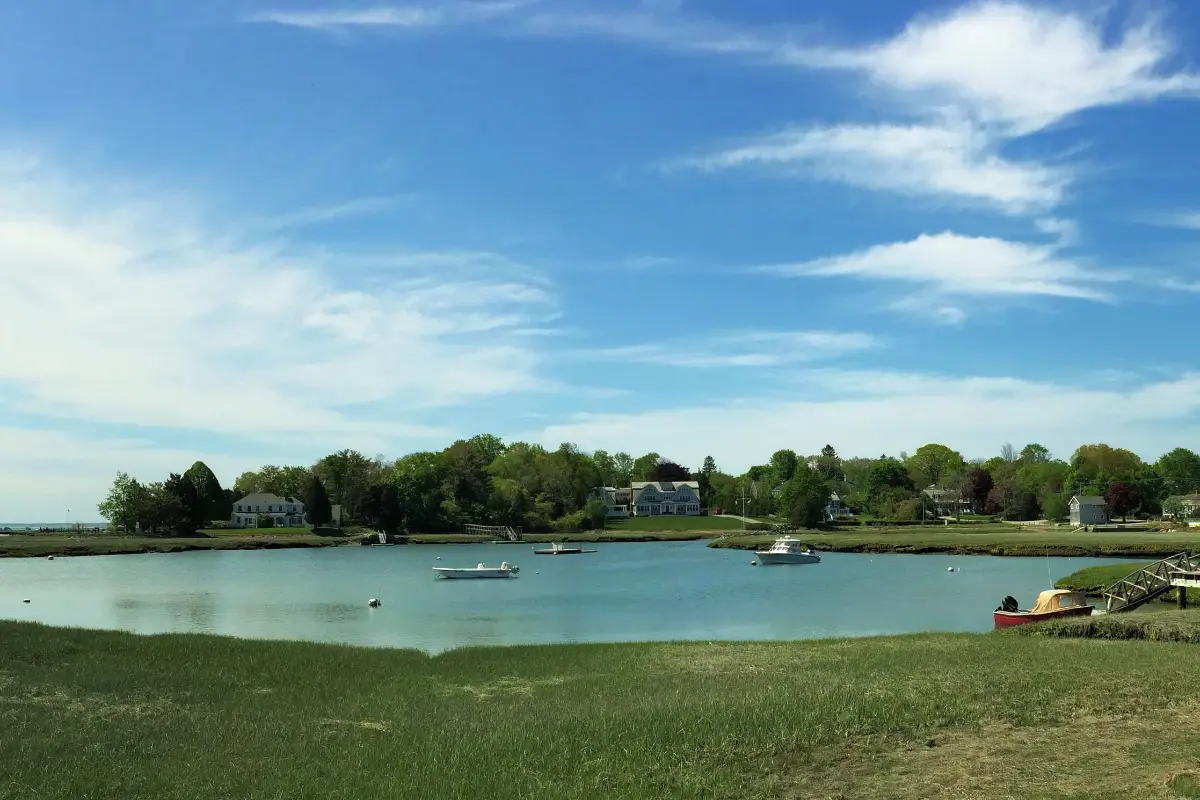
Duxbury inspects for a deck, not only for a sale
Duxbury requires a Title 5 inspection for any addition larger than 50 square feet, whether or not it adds a bedroom or a drop of design flow, according to the Board of Health’s Title 5 information page. State Title 5 keys the inspection to a transfer of title or an increase in flow; Duxbury adds building work to the list.
The Board’s septic system requirements page sorts projects into three tiers. Minor repairs such as a roof, windows or a chimney need no septic evaluation. Minor additions like a deck or a pool under 50 square feet need a disposal permit backed by an as-built or a Title 5 assessment. Major additions, with or without added flow, need an engineered plan, an as-built and a Title 5 inspection. Bedroom counts follow the Board’s own definition: at least 70 square feet, adequate ceiling height, electrical service, ventilation and a window.
Cesspools are automatic failures in Duxbury, and major building work on a property with a cesspool means an automatic upgrade. Every seepage pit must be located, opened and inspected and is judged by the same criteria. The Health Agent may also require a MassDEP-certified soil evaluation as part of any Title 5 inspection, and on certain streets one is required automatically. The Board’s stated reasons are drinking water, the shellfish beds and the beaches on Duxbury Bay. What does not apply is the Cape’s nitrogen regime: Duxbury is in Plymouth County, and MassDEP’s watershed permit table carries no Plymouth County town, so there is no I/A mandate or nitrogen disclosure at sale.
Tremont Street permits and the Duxbury Rules & Regulations
The Board of Health at Town Hall, 878 Tremont Street, (781) 934-1100 ext. 5490, reviews subsurface sewage disposal plans, witnesses soil evaluations and percolation tests, licenses installers and pumpers, and permits private wells, per its main page. The office is open Monday 8:00 a.m. to 7:00 p.m., Tuesday through Thursday 8:00 a.m. to 4:00 p.m., and closed to the public on Friday.
The Board meets the third Thursday of the month at 7:00 p.m., and it posts 2026 lists of permitted septic haulers and installers.
Duxbury adopts rules stricter than the state code under M.G.L. c. 111 §31 and calls them the Duxbury Rules & Regulations; the Board’s FAQ explains the difference from Title 5. The local and state regulations page lists a 1.0 Supplementary Rules & Regulations to Title 5, rules for private wells, an engineer and sanitarian design standard and floor drain regulations. The supplement is available on paper at the Board office; its specific setbacks and separation standards could not be read online, so ask the Board or your designer what applies to your lot. The fee schedule is posted only as a scanned image, so confirm permit fees with the office.
Money for a Duxbury upgrade: the credit and MassHousing, without a county loan
The Cape Cod AquiFund is limited to the 15 Barnstable County towns, per the county page, and no Duxbury betterment loan program appeared on the town site; whether one exists under the state’s Community Septic Management Program is a question for the Board of Health.
That leaves two statewide programs. The Title 5 tax credit returns 60% of up to $30,000 spent repairing or replacing a failed system at a principal residence, $18,000 lifetime and $4,000 a year with a five-year carryforward. A cesspool that fails under Duxbury’s automatic rule, or a system that fails the inspection an addition triggers, is a documented failure for Schedule SC; a voluntary upgrade is not. MassHousing’s septic repair loan offers up to $25,000 through participating lenders to owner-occupants of one- to four-family homes, with income limits of $69,500 for the deferred loan and $139,000 for the amortized loan, no appraisal, and work finished within six months of closing. Program terms are set by the agencies and change; confirm with the state or county page linked here. The tax credit guide walks through the claim.
Cesspool retirements, seepage pits and the rest of the Duxbury job list
Cesspool replacement is the job Duxbury’s rules generate most directly: automatic failure at inspection, automatic upgrade with major building work. Close behind is a full septic system replacement when a sale inspection or an addition-triggered inspection finds the field below seasonal high groundwater.
Title 5 inspections by a MassDEP-approved System Inspector come up here more often than elsewhere because of the 50-square-foot rule, and the inspector should know to read well #79 and to expect a soil evaluation request. Septic design and soil evaluation is where the Duxbury Rules & Regulations get applied to a plan. Septic tank replacement handles the conditional-pass metal tank, and leach field replacement in the reserve area is the fix when the tank is sound. The Title 5 guide explains the four results, and the buyer’s guide explains what to ask about a Duxbury system before you offer.
Well #79 and the seasonal water table along Duxbury Bay
Duxbury’s Board publishes a real-time groundwater reading from observation well #79 so that a Title 5 inspection can be adjusted for high groundwater on the day it is done. Seasonal high groundwater is the recurring problem: a leach field with any portion below it fails under 310 CMR 15.303, and a new field in fast sand needs five feet of separation.
The soils are coastal South Shore: sand near Duxbury Bay and the beach, till and wetlands inland, variable enough that the Board makes soil evaluations mandatory on some streets. The state plant list shows only the private Village at Duxbury facility at 286 Kings Town Way and no town plant, the Water & Sewer Department describes water functions rather than a sewer service area, and no Duxbury project sits on the 2025 or 2026 Clean Water SRF lists. Plan on septic as the long-term answer; a formal town statement to that effect was not available, so confirm with the Board if a listing suggests otherwise.
North along the coast, Marshfield has its own septic code and a sewer with a one-year connection rule; south, Kingston has a small sewer and a town loan to ask about. All 23 towns are on the service areas page.
Permits
Septic permits in Duxbury
- Office
- Town of Duxbury Board of Health
- Address
- 878 Tremont Street, Duxbury MA 02332 (Town Hall)
- Hours
- Monday 8:00 a.m. to 7:00 p.m.; Tuesday-Thursday 8:00 a.m. to 4:00 p.m.; Friday closed to the public
Confirm hours and fees with the office before you visit; towns change them without notice.
Money
Help paying for septic work
Two public programs pay for a large share of most Title 5 upgrades. Which one applies depends on the county the house is in.
Statewide, principal residence
State income tax credit for Title 5 work
- 60% of qualifying repair or replacement costs, on up to $30,000 of expenses
- Up to $18,000 in total credit per household, taken at up to $4,000 a year
- Unused credit carries forward for up to 5 years
- Applies to the home you live in, not a rental or second home
Plymouth County homeowners
Financing for South Shore homes
- AquiFund does not extend past the Cape Cod Canal
- The Town of Plymouth runs its own Title V septic loan, repaid as a betterment on the tax bill
- MassHousing offers a septic repair loan for eligible owner-occupants statewide
- Ask your board of health which town programs are open this year
Barnstable County homeowners only
Low-interest county financing (AquiFund)
- County-run Community Septic Management Loan Program
- Interest tiers from 0% to 5%, set by the type of work and whether you live there year-round
- Repaid over up to 20 years as a betterment on your property tax bill
- Covers Title 5 repairs, replacements and nitrogen-reducing upgrades
Program terms are set by the agencies and change; confirm with the state or county page linked here before you count on a number.
Licensing
Check the credentials before you sign
Massachusetts has no single statewide septic contractor license. Two separate approvals matter. A Title 5 inspection is valid only when a System Inspector approved by MassDEP performs it. Installation and repair work is permitted town by town: each board of health licenses installers and issues the Disposal System Construction Permit for the job.
You can check both yourself. The state publishes the inspector training and approval program, and the regulation itself sets out who may do what.
Three questions to ask
-
Which of you holds the Title 5 System Inspector approval, and can I see the certificate?
Only a MassDEP-approved System Inspector may sign an official inspection form. The approval is personal to the inspector, not to the company.
-
Are you on this town’s current list of approved septic installers?
Installation licenses are issued by each board of health, one town at a time. A crew licensed in Falmouth is not automatically licensed in Bourne.
-
Who pulls the permit, and will I get the as-built plan and the Certificate of Compliance?
The permit and the final sign-off are what a future buyer’s inspector will ask for. Get it in writing that both come to you when the work closes out.
The process
From your request to a site visit
-
Your request goes to one local septic company
It goes to a single septic company that works in your town and handles your kind of job. It is not sold to a list, and you will not get calls from five companies.
-
They call to set up a site visit
Expect a call, usually within one business day. The contractor asks about the house, the inspection report if you have one, and your timing, then books a visit.
-
You get a written quote and decide
After the visit you receive a written estimate with the scope and the permit plan. There is no fee and no obligation. If it is not a fit, say so and that is the end of it.
Questions homeowners ask
Do I need a Title 5 inspection to build an addition in Duxbury?
Yes, if the addition is larger than 50 square feet, even when it adds no bedroom and no design flow. State Title 5 keys the inspection to a transfer or an increase in flow; Duxbury adds building work. Major additions also need an engineered plan and an as-built. A deck or pool under 50 square feet needs a disposal permit backed by an as-built or a Title 5 assessment, and a roof, windows or a chimney need no septic review.
Can a cesspool pass a Title 5 inspection in Duxbury?
No. The Board of Health treats cesspools as automatic failures, and major building work on a property with a cesspool triggers an automatic upgrade. Every seepage pit must be located, opened and inspected and is judged by the same criteria. Under the state code a cesspool fails only on hydraulic or setback grounds, so Duxbury is stricter. Budget for a full Title 5 system if the deed or the as-built shows a cesspool.
What is observation well #79 and why does my inspector mention it?
It is a monitoring well whose live groundwater reading the Board publishes so that a Title 5 inspection can be adjusted for high groundwater on the day it is done. Any part of a leaching area below high groundwater is a failure under 310 CMR 15.303, so the reading can change a result. The Health Agent may also require a certified soil evaluation with the inspection, and on certain streets one is required automatically.
Does Duxbury have town sewer?
The state plant list shows only the private Village at Duxbury facility at 286 Kings Town Way and no municipal plant, the Water & Sewer Department describes water functions rather than a sewer service area, and no Duxbury project sits on the 2025 or 2026 Clean Water SRF lists. A formal statement that the town is unsewered was not available, so confirm with the Board if a listing claims sewer. Plan on septic as the long-term answer.
Can I use AquiFund in Duxbury?
No. AquiFund is a Barnstable County program limited to the 15 Cape towns; Duxbury is in Plymouth County. The state septic tax credit applies at a principal residence, 60% of up to $30,000 spent on a failed system, capped at $18,000 lifetime and $4,000 a year. MassHousing lends up to $25,000 through participating lenders. No Duxbury betterment loan program appeared on the town site; ask the Board whether one exists.
What are the Duxbury Board of Health hours?
Monday 8:00 a.m. to 7:00 p.m., Tuesday through Thursday 8:00 a.m. to 4:00 p.m., and closed to the public on Friday, at Town Hall, 878 Tremont Street, (781) 934-1100 ext. 5490. The Board meets the third Thursday of the month at 7:00 p.m. and posts 2026 lists of permitted septic haulers and installers. The fee schedule is a scanned image online, so confirm permit fees by phone.
Tell us about your system
One call or form, a written quote after a site visit. Free for homeowners, no obligation.